
From the Baroque period until the early 20th century, great musicians were not only instrumental virtuosos but also creators of their own works. Many of them—such as Johann Sebastian Bach, Wolfgang Amadeus Mozart, and Ferruccio Busoni—also came from important musical families or had their roots in environments where music was already a dominant part of their daily lives during childhood.
Sebastian Benda
Biography
8 April 1926 – 20 February 2003
Image
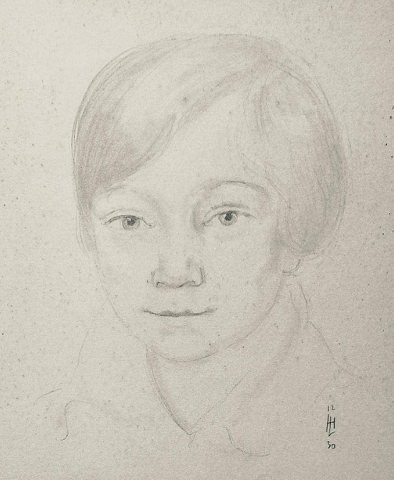
Sebastian Benda as a boy, drawing by Lissmann, 1930
The pianist Sebastian Benda was also born into a long musical tradition in 1926. His father, the Swiss native Jean Benda, was a well-known violin teacher who taught at Hoch’s Konservatorium in Frankfurt am Main. In 1933, he returned to Switzerland with his two children—Lola and Sebastian—and his wife Dora Hamann Benda, a violist and poet who was the solo violist with the Beromünster Radio Orchestra under conductor Hermann Scherchen. When his parents recognized their son’s precocious musical talent, they began teaching him music themselves before entrusting his musical education to various teachers of piano, harmony, and counterpoint.
Image
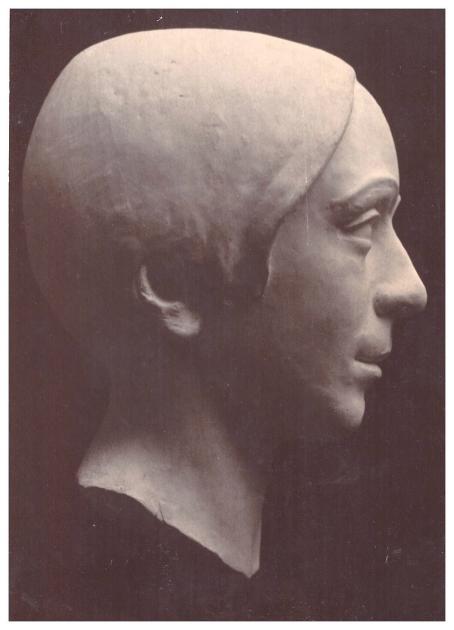
Young Sebastian Benda, sculpture by Simecek
Image
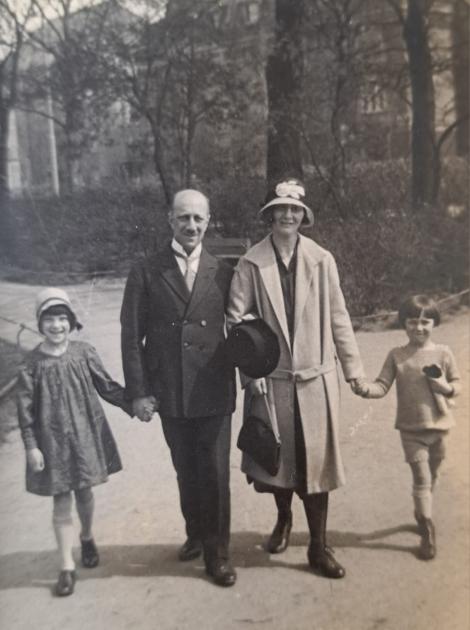
In Frankfurt with his parents and sister
When he was only nine, Sebastian’s compositions attracted the attention of renowned composers such as Arthur Honegger, Frank Martin, Alfredo Casella, and Joaquín Nin, who predicted a brilliant future for the talented youngster. Frank Martin declared his willingness to support Sebastian’s development as a composer and to become his teacher. In view of the career difficulties faced by composers at that time, Martin wrote to his pupil’s parents:
“It is important that Sebastian dedicate himself to the serious study of an instrument, for the composer’s métier does not offer anyone a genuine way of making a living unless he concentrates on composing tangos and march music.”
Image

Image

“I listened with great interest to the compositions of Jean Sebastian Benda, who strikes me as having an extraordinarily precocious temperament and an undeniable creative gift.”
Arthur Honegger, 21 December 1937
Years later, in an article dedicated to Frank Martin, Sebastian Benda recalled:
“After receiving this letter, I doubled my efforts on the piano but continued to compose with all my heart. Although, in the judgment of renowned musicians, I was precocious and studied harmony and counterpoint, composing was a very personal act of letting go for me—a spiritual state in which music served as the medium for direct expression.”
He also wrote:
“My personal recollections of Frank Martin go back to my childhood, when I became his pupil in composition at the age of eleven. In Geneva, he analyzed my compositions with great wisdom and gave me valuable advice. From that time on, Martin was always there in the various phases of my life, whether as a composer, a teacher, an artist, a person, or a friend.”
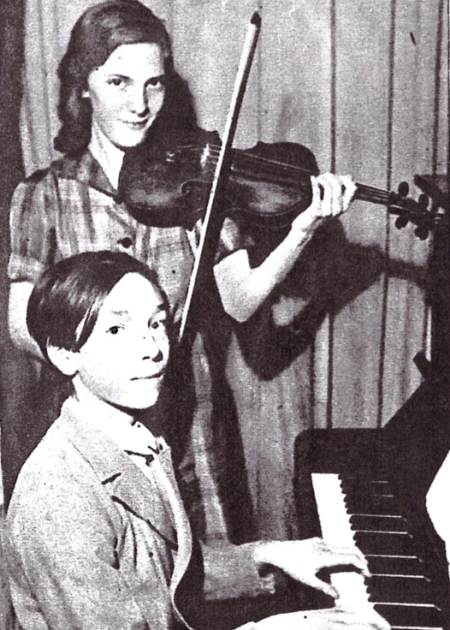
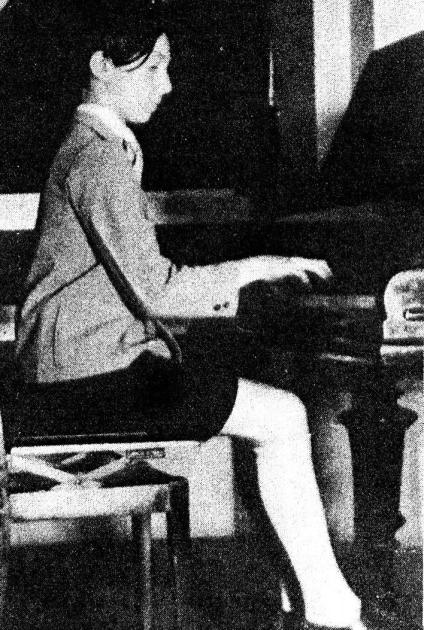
At the age of eleven, Sebastian often stood on stage as the partner of his older sister, the violinist Lola Benda. In a short time, he also acquired an impressive piano repertoire, which enabled him to give piano recitals in Switzerland at the young age of thirteen and to begin his studies at the Geneva Conservatory.
Image
Image
Image

Image
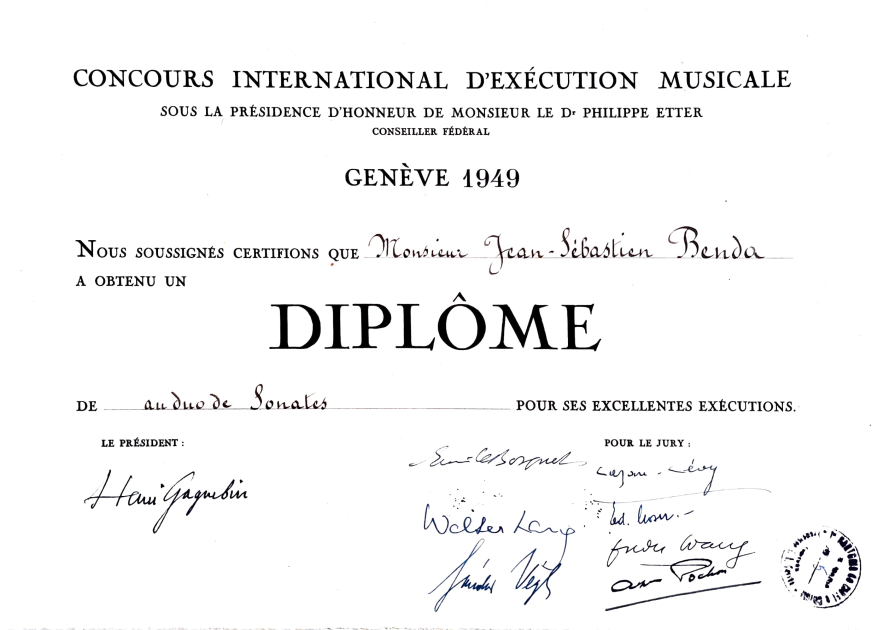
After completing his studies at this institution with the soloist diploma, Prix de virtuosité, Edwin Fischer, recognizing Sebastian's potential, invited him to become his regular pupil and to take part in the Lucerne Festival, passing on his profound musical knowledge, especially rooted in the tradition of composers such as Bach, Mozart, Beethoven, Schubert, Schumann, and Brahms. Sebastian Benda was one of the few pupils whom Fischer taught for a longer period.
He studied with Fischer for seven years and thus received the essence of a transcendental art, a piano tradition which, through Edwin Fischer, via Martin Krause, Franz Liszt, and Carl Czerny, formed a direct genealogical line to Ludwig van Beethoven.
At an early age, Benda performed as a soloist in several concert series in Switzerland together with Edwin Fischer. This marked the beginning of a career as a solo pianist, which ultimately took him to 40 countries across Europe, Asia, and North and South America.
After Fischer’s death, Sebastian Benda wrote the following about him:
“I was given the privilege of becoming very closely acquainted with Edwin Fischer. Not only was I his pupil, but I was also given the honor of performing concertos for piano and orchestra by Mozart and Bach under his direction. Fischer was one of the last personalities who, in our age of objectivity, preserved the mystical art of sensitivity to sound. He was much more than a great pianist: he was a great musician with the rare gift of being able to communicate the joy and mystery of a composition. He possessed great charisma and sought the true value of an art that was constantly renewing itself; he was a creator of the new in the truest sense of the word. Despite his profound musical knowledge, he was a highly instinctive musician. He taught us this: “You should not seek anything in the music; it reveals itself to you on its own. Create this invisible link so that the composer’s flow of ideas comes to you: listen, listen, listen…”
Image
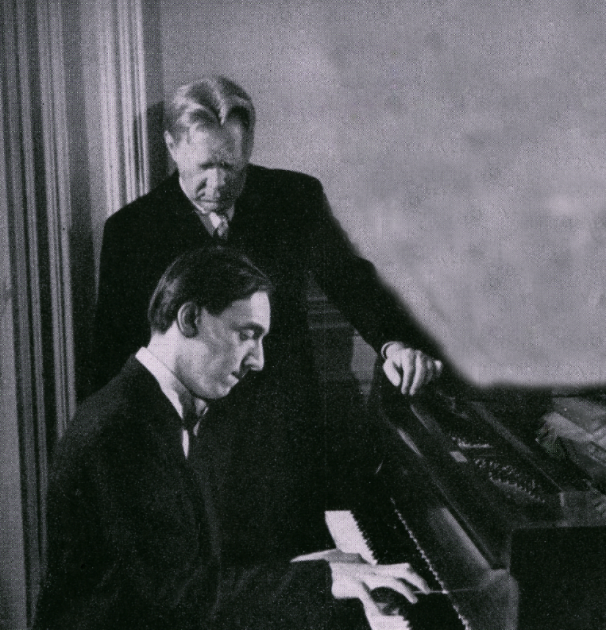
With his master, Edwin Fischer
Image

Image

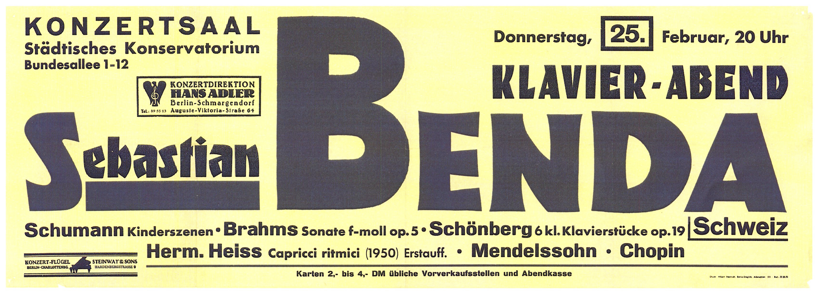
The search for new values in destroyed post-war Europe manifested itself in music as a radical break with composing traditions. This “mood of regeneration” in the early years after World War II also affected the young Benda, who now dedicated himself more intensely to the interpretation of contemporary music. For instance, in 1949 he participated as a pianist and chamber musician at the Tage für Neue Musik in Darmstadt. Realizing the different directions contemporary music was taking, he decided to dedicate himself professionally to musical interpretation from then on, with composition remaining a personal activity.
Image

Image

Image

Image
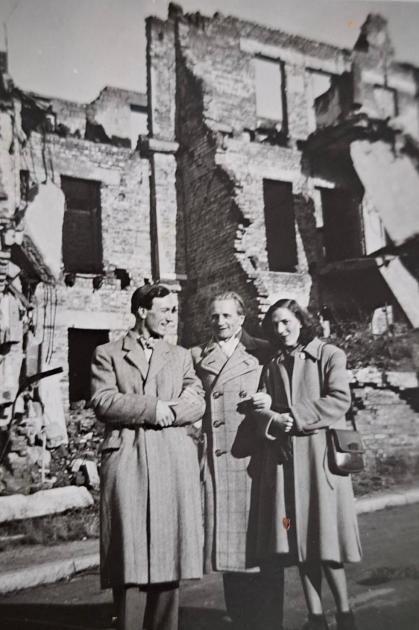
Darmstadt after World War II, with his sister Lola and the composer Hermann Heiss
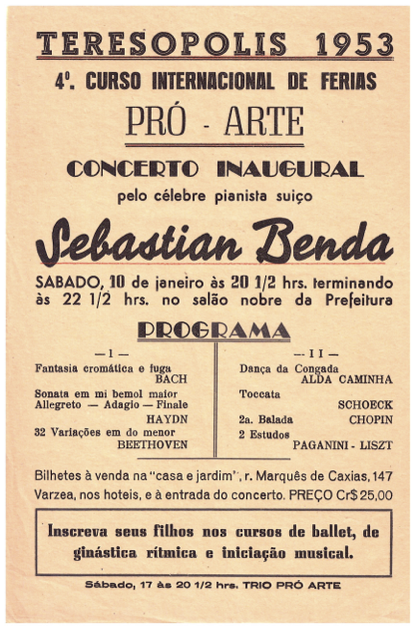
In 1952, he went on a tour of South America. In Brazil, he discovered a new, fascinating world which impressed him so deeply that he decided to settle there.
Image
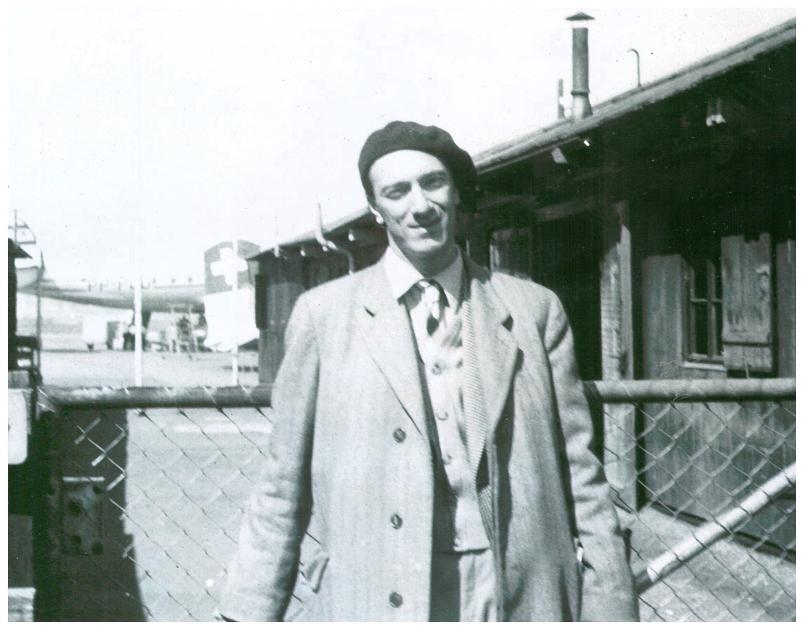
Departure from Europe (Zurich airport)
Image

Teatro Municipal do Rio de Janeiro, 1955
Years later, he wrote about this:
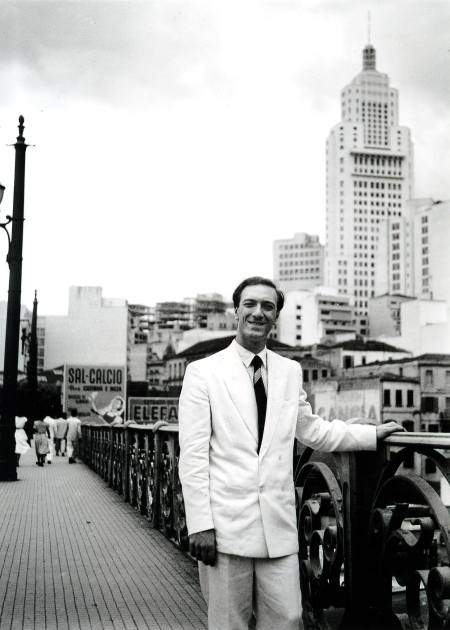
“In Brazil, the countryside, the climate, the people, and the way of life in general were completely different from what I was used to, and many principles that I subscribed to had to be broadened through a new way of looking at things and through tolerance so that I could be positively affected by these differences.”
Image
Image

Image

Experiencing the dynamism and life in the new world
Benda rapidly expanded his repertoire to include the works of Heitor Villa-Lobos and other South American composers, which he subsequently performed all over the world.
Image

Image

Image

Image
Image

Image

Image

With Luzia do Eirado Dias, a musician and pedagogue, he formed a family, having five children—Angela, Christian, François, Nancy, and Denise—all of whom became professional musicians and with whom he shared musical activities during the last period of his life.
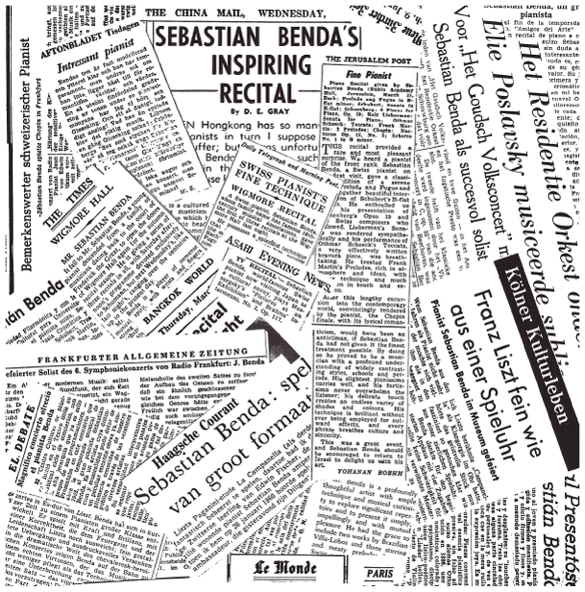
Sebastian Benda lived in Brazil for almost three decades (1952–1981) and from there went on concert tours in many countries, mainly in Europe, where he was acclaimed by the public and specialist critics.
Image

Vienna, 1960
Image

Town Hall, New York, 1966
Image

Image
Image
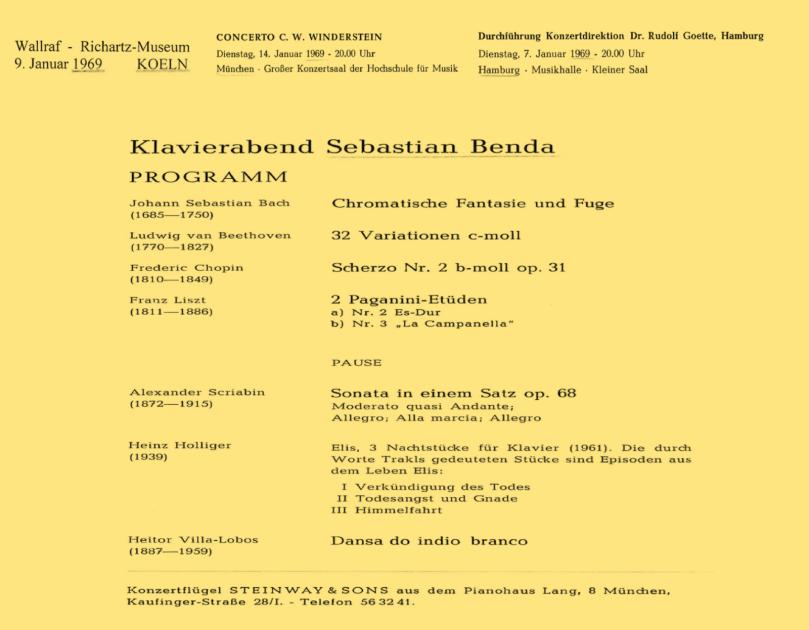
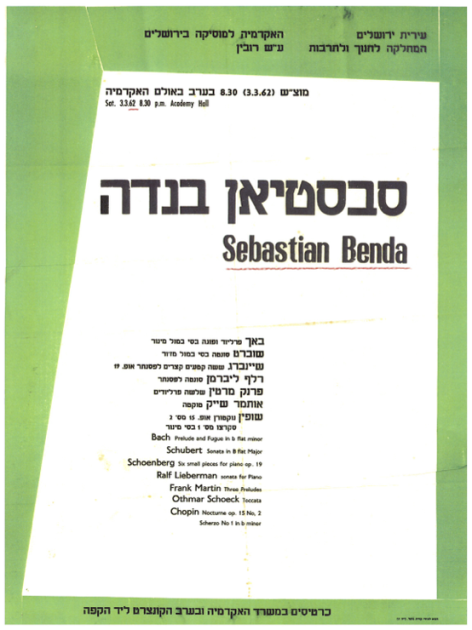
Concert tour in Germany, 1969
Image

Image
Image

Image

As a soloist, he performed with orchestras such as the Tonhalle Orchestra Zurich, Orchestre de la Suisse Romande, NDR Hamburg, Hessischer Rundfunk Symphony Orchestra, Frankfurt Radio Symphony Orchestra, Kol Israel Orchestra (Jerusalem), The Hague Philharmonic, George Enescu Philharmonic Orchestra (Bucharest), Osaka Philharmonic Orchestra, and Sofia Philharmonic Orchestra.
Renowned conductors such as Hermann Scherchen, Hans von Hoesslin, Hans Schmidt-Isserstedt, Erich Schmidt, Ernest Bour, Takashi Asahina, as well as Brazilian conductors Souza Lima, Eleazar de Carvalho, Isaac Karabtchewsky, and Camargo Guarnieri, valued Benda as a congenial partner and performer.
Image

Image

Image

Image

Image

Image

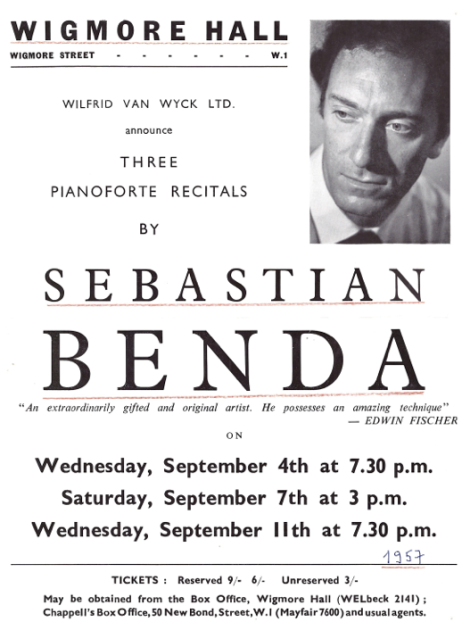
In 1958, Sebastian Benda was honored with the Bach Medal of the Harriet Cohen International Music Award Council after performing three piano recitals with distinct programs at London’s Wigmore Hall within a single week.
Image
Image

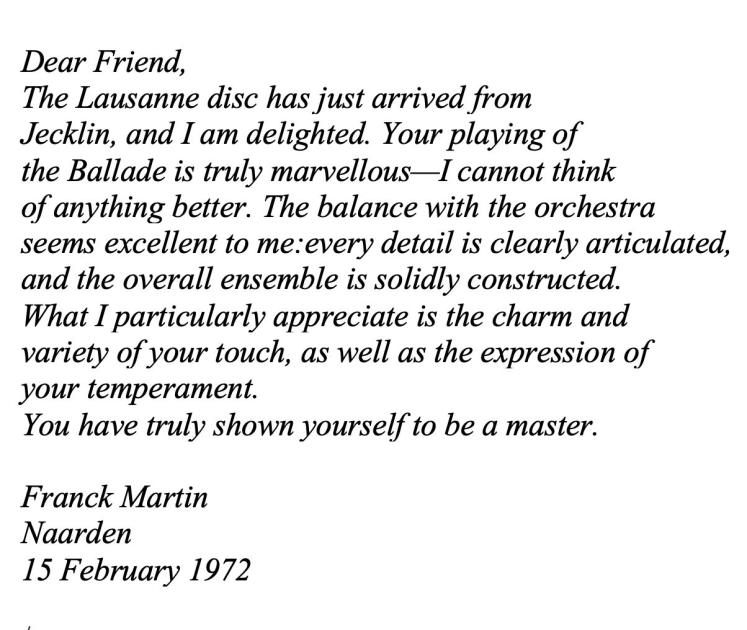
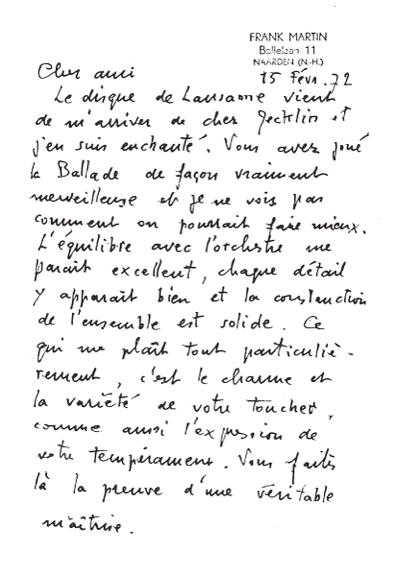
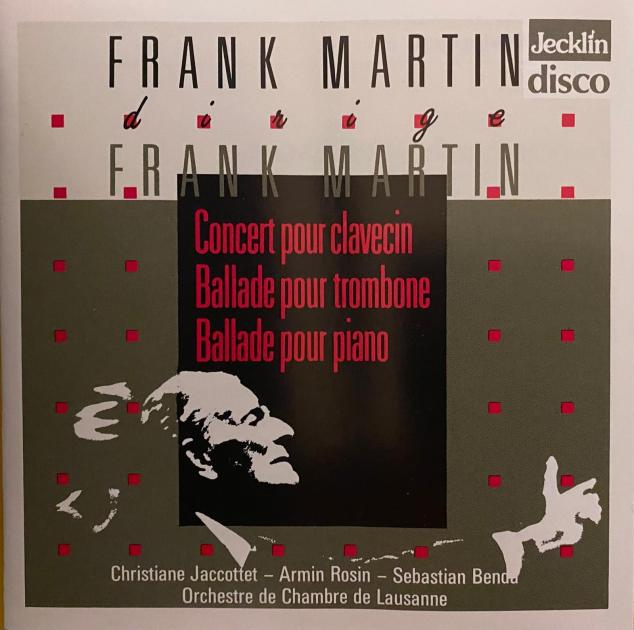
The intensive cooperation with Frank Martin, which lasted until the composer’s death in 1974, reached its high point with the complete recording of Martin’s works for solo piano and, under the composer’s baton, the Ballade for piano and orchestra, which Sebastian Benda performed numerous times during his career. Later, in partnership with Paul Badura-Skoda, he recorded Martin’s works for piano and orchestra.
In one of the many lectures Sebastian Benda gave around the world, he described his relationship with
Martin as follows:
“To me, Frank Martin was not only an incomparable composer whose works gripped audiences on different continents with their emotionality; to me, he was the master, teacher, adviser, friend, and, in the final analysis, the conductor of his own works, with whom I had the honor of working.”
Image

Under the baton of Frank Martin during the recording of the Ballade
Image
Image
Image

Image
During his time in Brazil, Benda’s artistic engagement was equally intensive and varied: he initiated concert series, founded chamber music ensembles, developed plans to advance Brazilian cultural life, collaborated with several music faculties across the country, and was ultimately honored by the Brazilian government with the “Villa-Lobos Medal.”
Image

With students, including his future wife Luzia do Eirado Dias (front right)
Image

Image

Image
After being appointed a faculty member of the Hochschule für Musik und darstellende Kunst in Graz, Austria, Sebastian Benda returned to Europe with his family in 1981 to work until 1994 as professor and rector at what is now the University of Music and Performing Arts Graz (KUG). During this phase of his life, he placed particular emphasis on teaching piano. Through numerous performance classes at various universities—in Paris, Cologne, Basel, London, and Tokyo—his master classes for piano and chamber music, and his lecture-recitals that combined his broad knowledge of music history with highly sensitive interpretations, he made a lasting impression on entire generations of young musicians.
Image

Image

Recital during master classes at Musashino Academia Musicae, Tokyo, 1994
Image
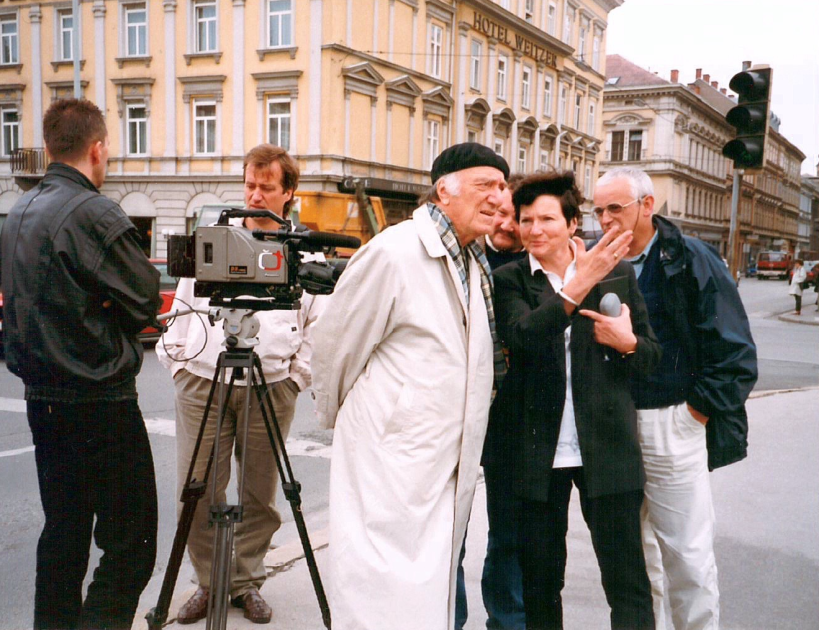
During the filming of his biographical documentary for Czech television
Right up until the last moments of his life in February 2003, Sebastian Benda devoted himself entirely to music—composing cadenzas, making transcriptions, arranging and revising works mainly from the eighteenth century, and recording with his children and friends.
Image

With Paul Badura-Skoda recording Martin’s works for piano and orchestra
Image
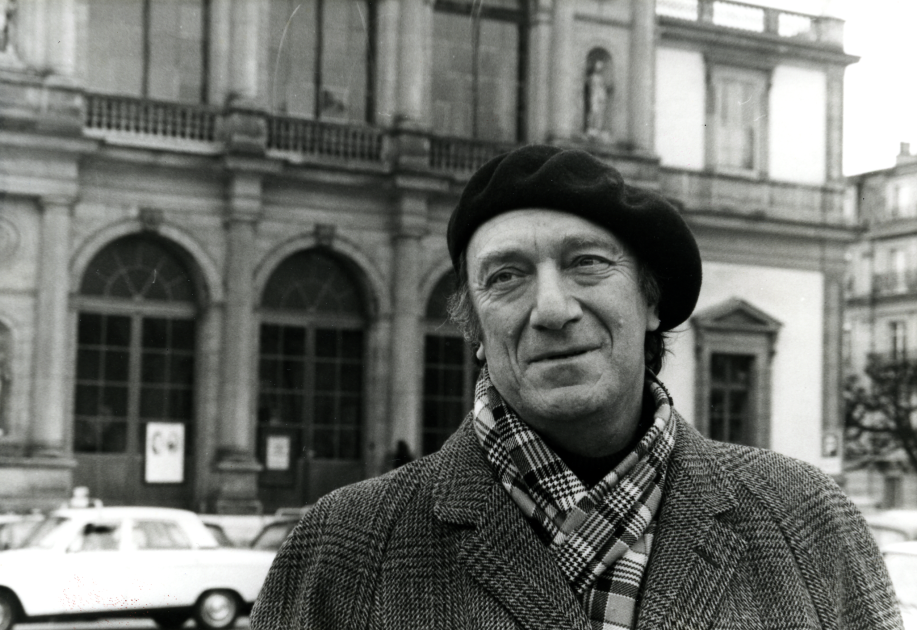
Back at the Geneva Conservatory decades after his early studies
Sebastian Benda was a true humanist whose charismatic personality and strong presence had a magnetic effect on all who encountered him—especially evident in his concert audiences. His playing, like his character, was marked by profound poetry and simplicity, coupled with great energy and vitality, wholly in the Schumannesque spirit. He was also a musician of great depth, whose interpretations left no room for the superficial or the superfluous.
Image

Sebastian Benda